May 2025 - Nov 2025
In Brief
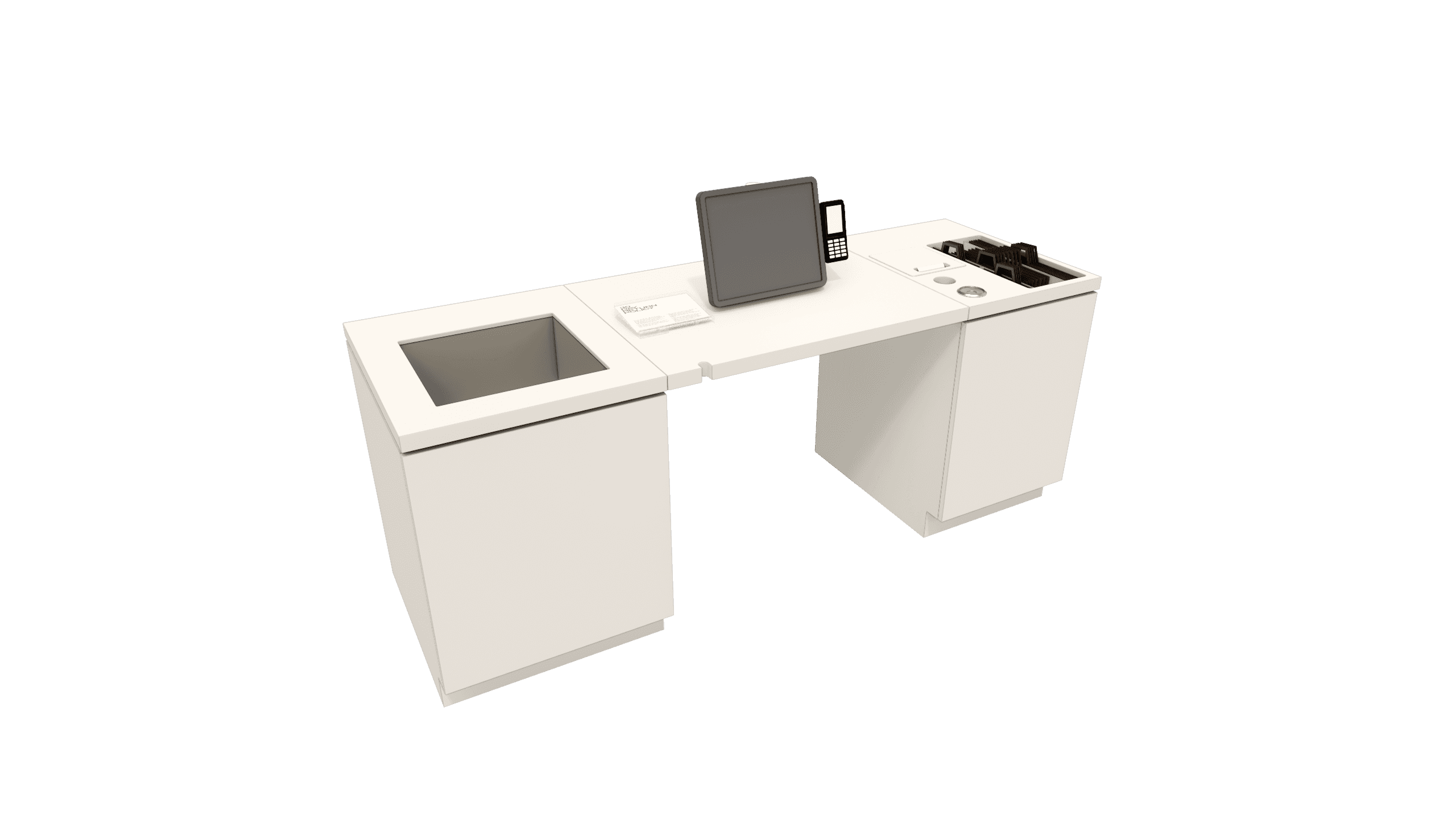
H&M set out to develop an accessible self-checkout in line with the European Accessibility Act, and I was brought in to lead the initiative. The goals were to A) Establish internal Accessibility Principles, and B) Define the physical aspects of our future Accessible Self-Checkout.
We concluded the furniture direction, explored store layout options, and shared the Accessibility Principles. This work set a clear direction for the upcoming development, with the first version expected to be rolled out in August 2026.
The Challenge
The challenge was to bring people together, build a shared understanding of evolving accessibility requirements, and translate those into an accessible design that balances technical constraints and business needs.
Approach
Building the foundation
I first assessed our here-and-now state, and invited stakeholders to join a walkthrough in one of our stores from the perspective of a wheelchair user — an exercise that helped spark awareness.
Defining the physical experience
Together with H&M’s legal team and an external accessibility agency, I translated the European Accessibility Act into clear and actionable principles. They align accessibility standards across software, hardware, store layout, and furniture design, and serve as guardrails for the physical design work that followed.
We began with a competitor review in Paris — a market where accessible self-checkouts are already expected. The goal was to be inspired by how other retailers approach inclusive checkout experiences and to understand what works well (and what doesn’t) in real store environments.
This was complemented by an in-store accessibility evaluation of H&M’s existing self-checkout, carried out together with accessibility specialists and users with visual and motor impairments. By observing real interactions — from entering the store to completing a purchase — we identified strengths and pain points related to layout, reach, hardware placement, and interaction flow.
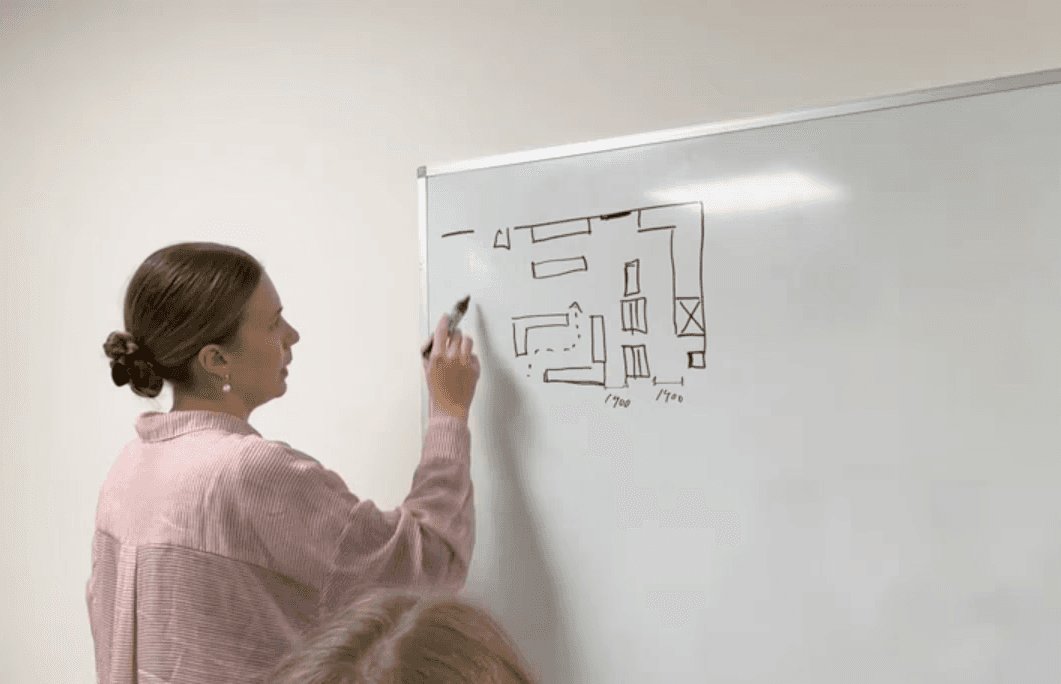
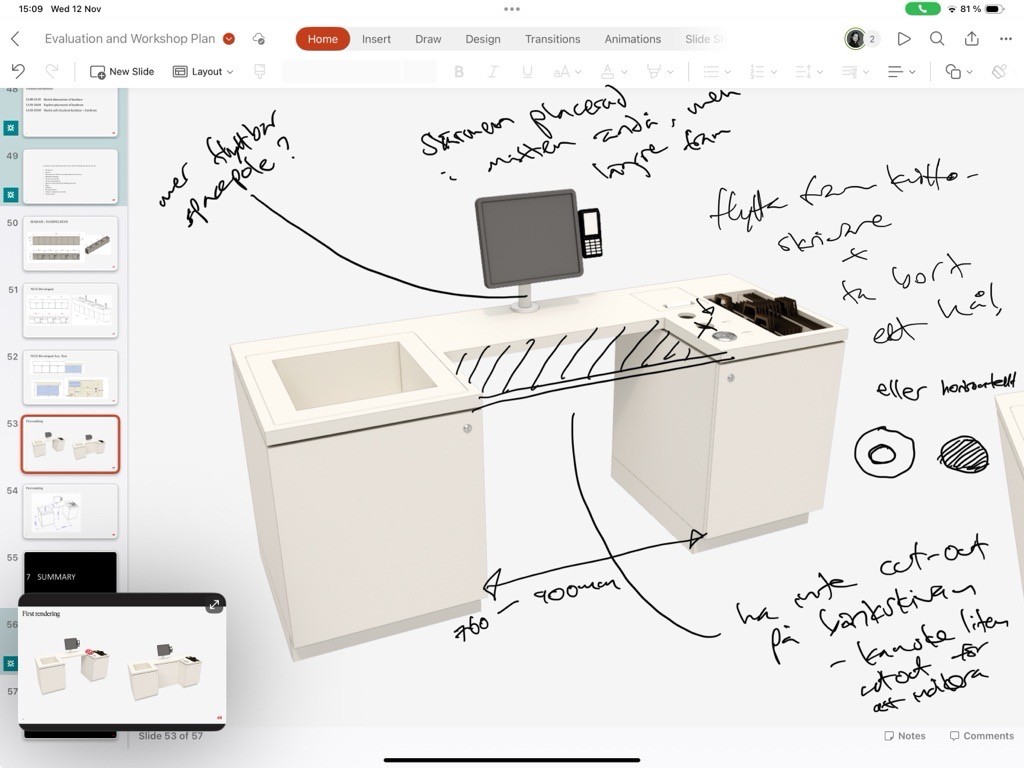
The insights were then brought into a hands-on workshop where we sketched, discussed, and prototyped together. Guided by the Accessibility Principles, we translated learnings into concrete decisions around store layout, furniture dimensions, spacing, and hardware placement. As one of the furniture designers reflected at the end of the day:
We achieved a years worth of work
in just one day.
Solution
The work resulted in a clear physical direction for H&M’s accessible self-checkout, covering both store layout principles and a scalable furniture design.
Store layout
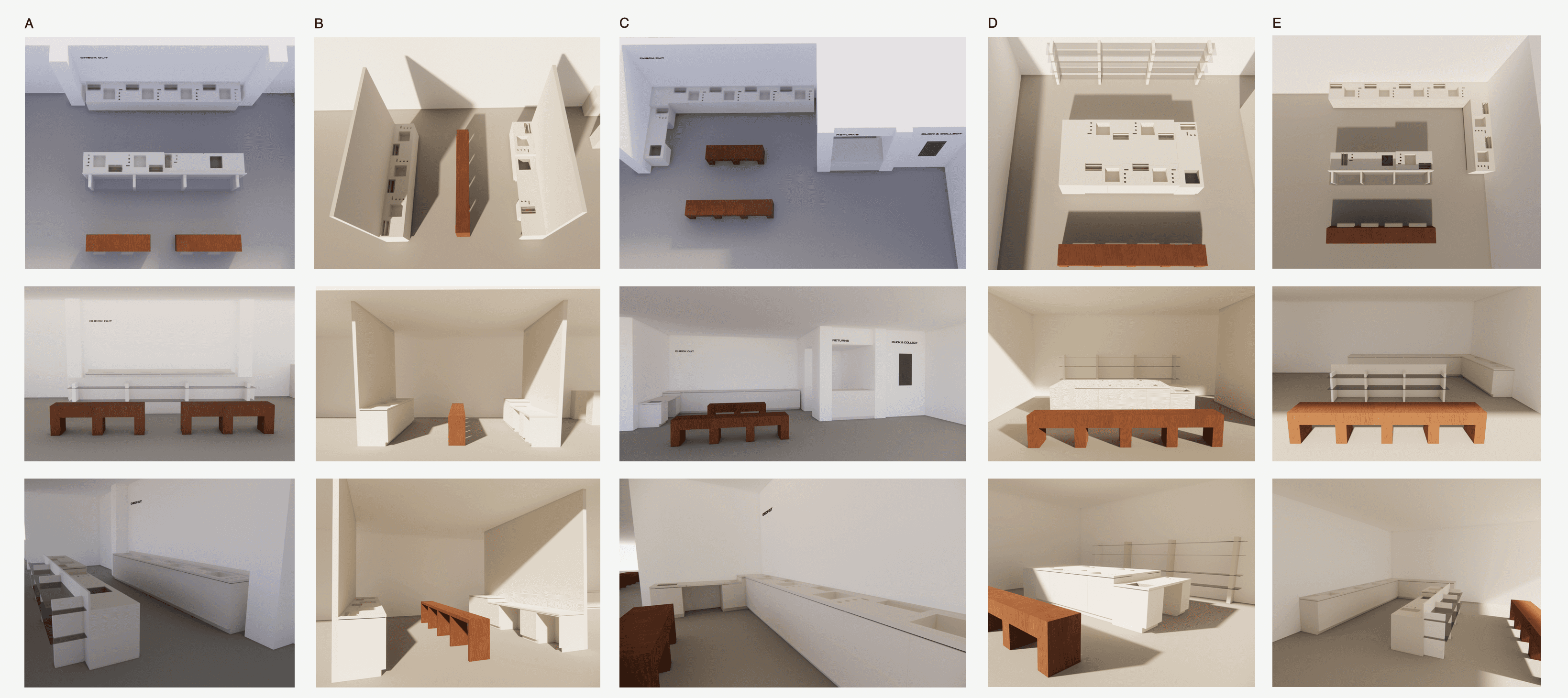
We defined a set of layout directions to be explored depending on the character and constraints of each store. Across all variations, the layouts are designed to make it clear that:
The self-checkout area is easy to find and approach, regardless of entry point
Self-checkout is the primary payment option for all customers
Access is unobstructed, with generous space for movement and manoeuvring
Customer flow is intuitive and smooth, reducing uncertainty around queuing and circulation
Furniture design
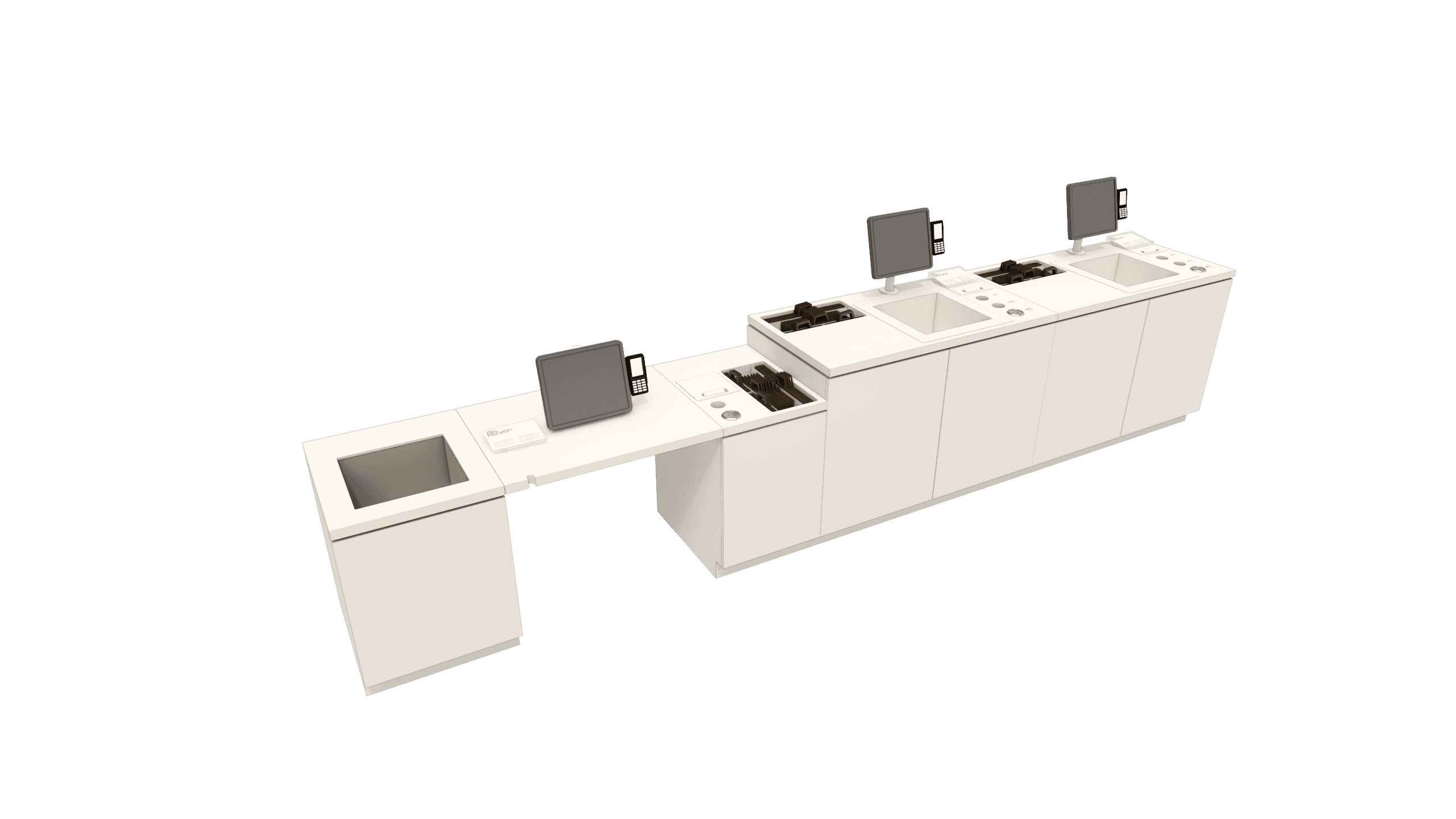
We concluded a self-checkout furniture design that meets the strictest accessibility requirements across relevant European standards. By designing for the highest bar from the start, the solution is less likely to require redesigns in markets with stricter local regulations — supporting smoother scalability over time.
The furniture design:
Supports front reach, with generous knee and toe clearance
Enables a natural use flow
Meets current technical constraints, including RFID box depth and hard-tag handling
Ensures that all operable parts (screen, payment terminal, manual scanner etc.) are within required reach ranges across height, depth, and width
Together, the layout directions and furniture design form a robust foundation for delivering an accessible self-checkout experience that is both inclusive by design and ready to scale.
Impact
Although in-store impact will be measured post-launch (August 2026), the initiative has already had meaningful organisational impact. H&M now has a shared set of Accessibility Principles for self-checkouts, a scalable furniture solution designed for the strictest requirements, and a clearer internal understanding of how accessibility translates into physical retail environments. This work has also significantly reduced the risk of legal consequences and thereby reputational damage by addressing accessibility early in the development process.
This has shifted accessibility from a reactive compliance topic to a proactive design consideration across teams involved in checkout development.
Reflection
Looking ahead, there are clear opportunities to further improve the solution as the software and hardware product matures. An Accessible Interface Device (AID) will be added once hardware integration and software development are complete, enabling more customers to use the self-checkout independently. As RFID scanning hardware evolves, a shallower scanning unit could also allow for a slimmer furniture design, supporting more space efficient store layouts. Over time, reducing the need for frequent staff assistance, such as by removing hard tags, may also make it possible to lower more units and move closer to making all self-checkouts fully accessible by default.
On a personal level, this project strengthened my confidence as a leader and sharpened my ability to advocate for accessibility and user-centred design; it was the first time my colleagues in Store Design involved users in their design process since joining H&M, which I see as a big step in the right direction.